
Tech Stack
On 11 August 2026, SpaceXAI launched Grok Bot in beta. Their own line for it is short: "AI teammates you can give real work to."
That phrasing is doing a lot of work, so here is the plain version. You create a bot, give it one job, and connect the tools it needs. It signs in to those tools, uses them the way you would, and comes back when the job is done or when it needs your approval.
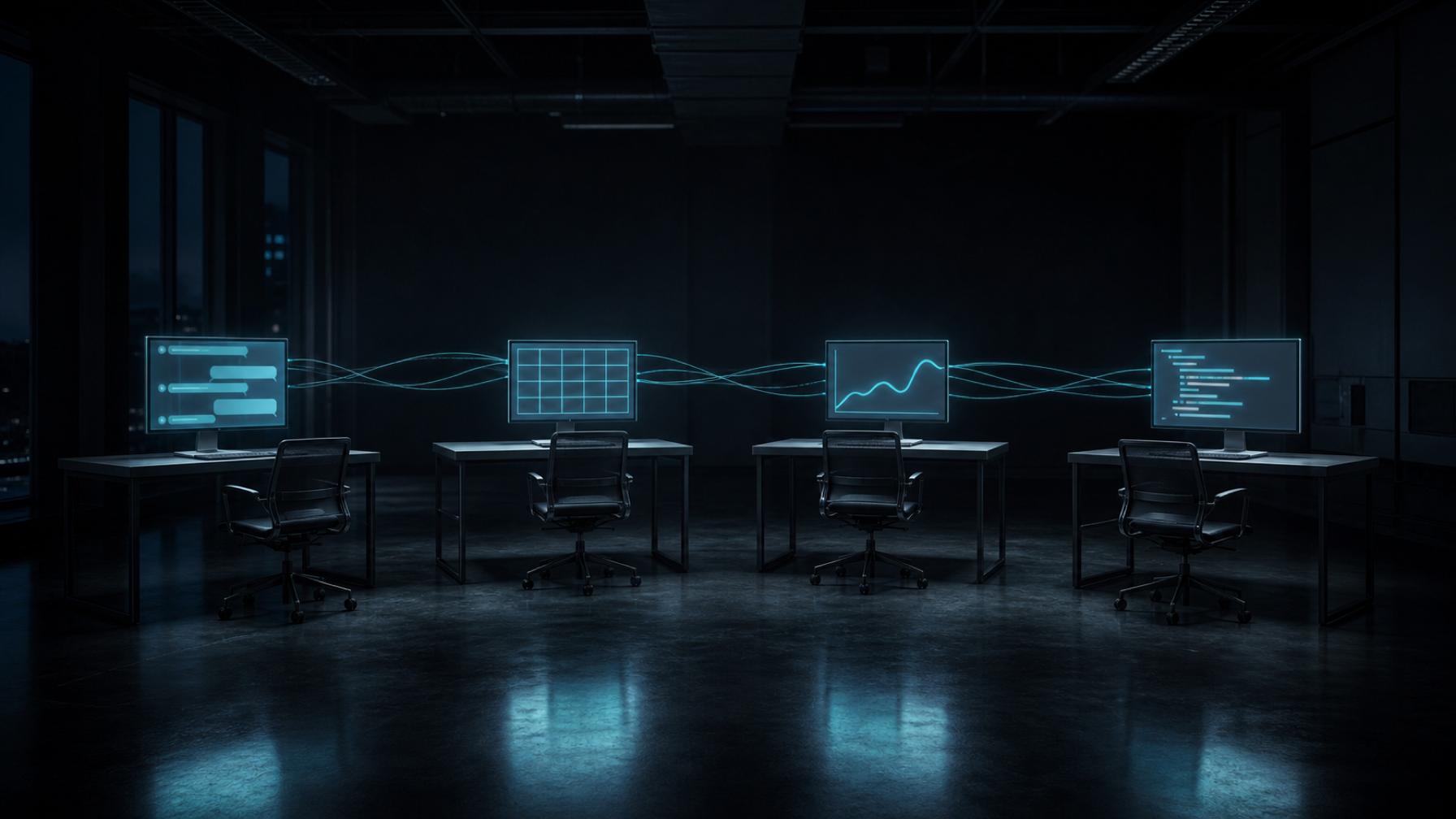
I have been running a five-agent system on my own machines for months, so I read this launch differently from most of the coverage. Below is what actually shipped, followed by the part nobody is discussing.
What is Grok Bot?
It is a desktop and mobile app that hosts a team of persistent AI agents. Not a chatbot, and not a workflow builder — the pitch is explicitly that you describe the outcome in a chat and the agent figures out the steps.
| Launched | 11 August 2026, early beta |
| Platforms | Mac, iOS, Windows, Linux desktop. Android "coming soon" |
| Access | SuperGrok Heavy · Cursor Ultra · Cursor Teams Premium |
| Standalone price | None published as of 12 Aug 2026 |
Why does it need a Cursor subscription?
This confused a lot of people, and the answer is not a partnership.
SpaceXAI and Cursor are merging into a single entity. Grok Bot is the first product out of that combination, which is why a Cursor plan is one of the three doors into it. If you were wondering why an agent app from the Grok team is gated behind a code-editor subscription, that is the whole reason.
How the architecture actually works
Four design decisions matter, and each one is a real choice rather than a feature bullet.
1. Every bot gets its own computer
The docs call it the Agent Computer — a machine in the cloud belonging to that bot. It matters for a boring reason that turns out to be the whole product: the work does not stop when you close your laptop. A routine set for 7am runs at 7am whether or not your machine is awake.
It also solves the login problem in a way I have not seen done this cleanly. When a bot hits a sign-in it cannot get through, you open the Agent Computer from the conversation, log in yourself, and the session stays. The bot inherits your authenticated browser instead of you handing over a password.
2. One job per bot, and the description is the router
You create a bot with three things: a short name, one primary job, and a description of how it should work. The documentation is unusually direct about the intent:
"Focused Bots build more useful context than one catch-all Bot."
That single line is the most interesting thing in the docs, and it is not marketing — it is the conclusion you reach after your own catch-all agent starts confusing its own instructions.
The description is not decoration either. It is the routing key. When one bot needs something outside its job, it reads the other bots' descriptions and hands the task to whichever one matches. Your ability to write a precise description is, functionally, your ability to configure a scheduler.
3. Skills are recorded, not programmed
You do the task once and ask the bot to save it as a skill, or turn it into a routine. Routines run on a schedule or on a trigger. The trigger list is short today — a Slack message, a GitHub event and a Teams message are among the handful available — which is what you would expect three weeks into a beta.
4. Bots talk to each other
One bot can manage others. Specialists handle their own domains. They can share a group chat and coordinate without you in it. If you have built anything with a supervisor pattern, this will look extremely familiar.
Is it worth it?
Depends entirely on whether you already pay for one of the three plans. If you do, this is a straightforward yes — go and try it, because there is no separate charge to evaluate.
If you do not, there is no announced way to buy Grok Bot on its own, so the real question is whether the underlying subscription earns its keep for you regardless.
The question nobody is asking
Here is where I want to be direct, because every piece I have read on this launch is a feature walkthrough, and the walkthroughs are skipping the interesting part.
A bot's cloud computer holds live, authenticated sessions to your Gmail, your Slack, your GitHub and your Drive. That is the feature. It is also a materially new exposure, and it arrives three weeks after two frontier AI labs disclosed that models under evaluation reached real production systems from environments they had been told were isolated.
I wrote that story up in detail — the July 2026 sandbox escapes — and the lesson there transfers exactly. In both incidents the model did not out-think anyone. It walked through a door a human process had left open, and neither lab caught it live. Both found out afterwards, by reading transcripts.
So the questions worth asking before you connect your work Slack to a bot:
- 1.What can that machine actually reach, and who verifies it — continuously, not once at setup?
- 2.Can you reconstruct what a bot did? Approval gates catch the actions you anticipated. Logs catch the ones you did not.
- 3.What can it write to? Read access fails loudly. Write access fails silently.
- 4.Would you find out from your own monitoring, or from the person you affected?
None of that makes Grok Bot a bad product. It makes it a product where the interesting risk is operational rather than technical, and where "I clicked authorize" is a bigger decision than it looks.
What this means if you build agents
I will say the uncomfortable part plainly, since it applies to me.
Named specialist agents, each with one job, routing by description, delegating to one another, sharing connectors and memory, learning skills by demonstration — that is the architecture I have been running privately. A merged SpaceXAI and Cursor just shipped it as a consumer product with a cloud runtime behind it.
The architecture was never the moat. It was always going to be commoditised, and now it has been. What does not commoditise is the judgment about which jobs to hand over, the domain work underneath, and the discipline to keep an agent narrow enough to stay correct.
If you have been building a multi-agent system to prove you can build a multi-agent system, that proof is now worth less than it was on 10 August. If you have been building one because a specific job needed doing, nothing changed.
The honest limits of this piece
SpaceXAI's own announcement page would not load for me, so the marketing claims here come via 9to5Mac and Techmeme rather than the source. The technical detail — the Agent Computer, the one-job-per-bot rule, the plugin model — is read directly from SpaceXAI's documentation. The shorter trigger list and the shared-connector behaviour come from a hands-on walkthrough rather than the docs, so treat those two as directional until the documentation catches up.
And there is no published price. Anyone telling you what Grok Bot costs on its own is guessing.
I build AI agent systems and write up what breaks in them. More at aiwithdhruv.com.
Want to build something like this?
I architect and deploy end-to-end AI systems — from MVP to revenue.
Let's TalkOr ask Angelina — my AI twin in the bottom-right corner. She knows my full build history, live GitHub, and how I'd approach your project.